
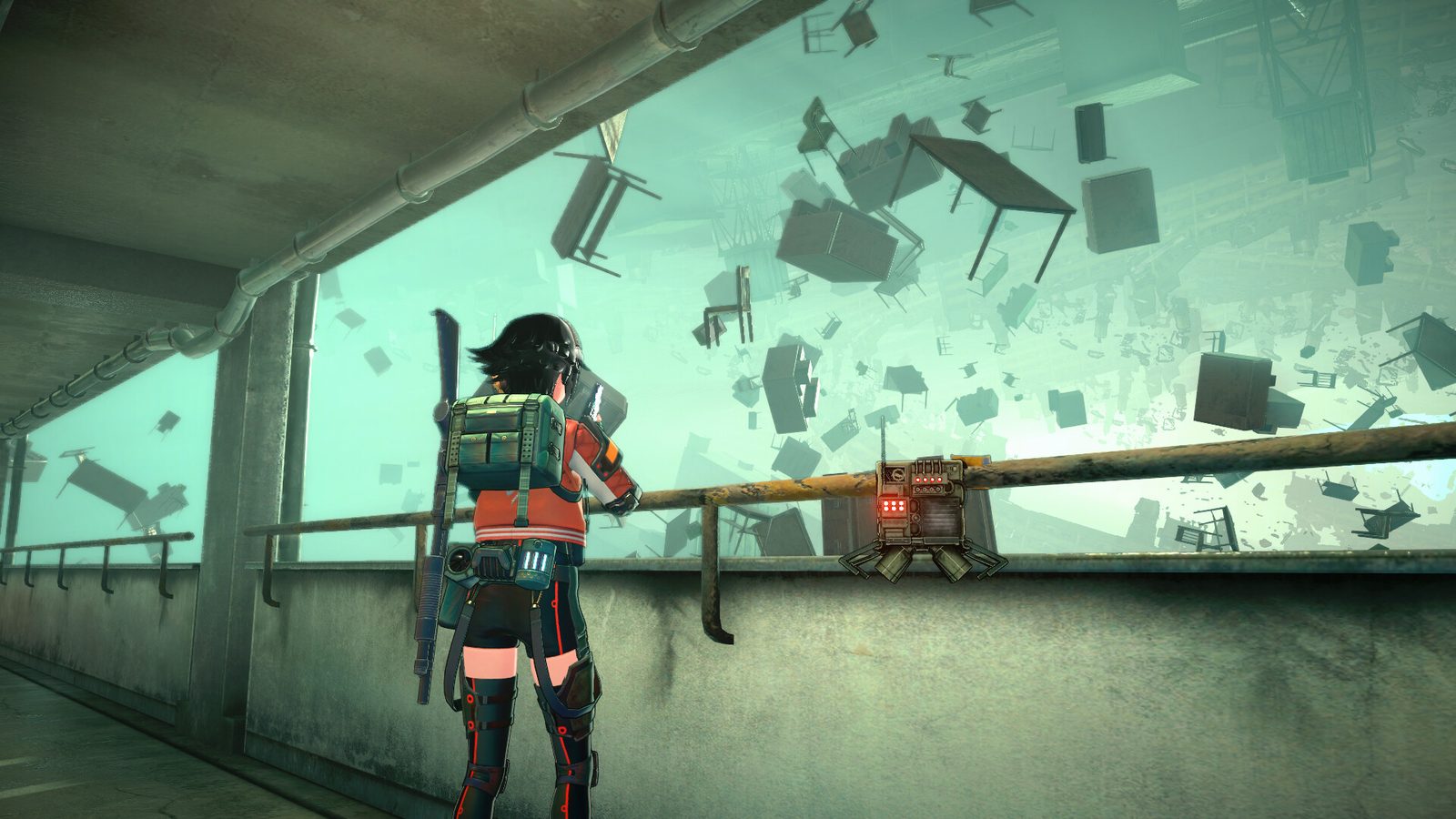
ANOMALITH has one ending. There is no route split, no true ending unlocked by a second playthrough, and no choice that changes how the story closes. Producer Gai Kidokoro was asked at Tokyo Game Show 2026 whether the game has multiple endings, and answered with a single word: no.
That is the whole answer. What follows is what it means for how you play, because a game without branches changes the value of the decisions you make along the way.
The question was asked directly
The interview ran during TGS 2026 and covered combat, the Anomalization skills, boss design and the game's tone. The endings question sat between a question about how skill use affects the story and one about boss mechanics, and it got the shortest answer in the interview.
That brevity is useful. A producer hedging about endings usually means conditional content; a flat no means the scenario was written as one line and stays that way. Romeo Tanaka wrote that scenario, and the structure matches a writer working toward a single conclusion rather than juggling parallel ones.
Choices change the run, not the story
Dialogue options exist, and sub-quests open up as you progress, but none of them reroute the plot. What they change is what you understand by the time you reach the end: which characters you spent time with, which investigation reports you picked up, and how much of the Anomaly Zones' origin you pieced together before the credits.
That distinction matters when you are deciding whether to replay. A second run does not show you a different ending, so replaying for the story is the wrong reason. Replaying for the systems — a different weapon class, a harder difficulty, a cleaner extraction record — is the reason the game offers.
Skill use does not affect the plot either
The same interview asked whether leaning on Anomalization skills, which visibly erode Reona's humanity as the meter drains, changes the story. The answer was no, with an instruction attached: use them as much as you like.
So the corruption you see is presentation rather than a hidden alignment meter. Nothing is being tallied for a later reveal. If you were holding back on skills in a first run in case the game was keeping score, you were paying a combat cost for nothing.
Why a single ending suits this structure
ANOMALITH is built as a loop: dive, retrieve, return, upgrade, dive again. A branching narrative fights that shape, because branches need to be authored, tested and voiced in every language the game ships, and the payoff arrives once.
The game puts its variation somewhere cheaper and more repeatable instead. Enemy placement shifts as you progress, boss encounters change shape after their first clear, and the difficulty setting moves the resource pressure rather than the story. The producer's framing of the game's goal was atmosphere — the unease of a place that looks ordinary and is not — and atmosphere does not need a fork in the road.
What a second run is actually for
Not the ending. The save continues past the credits, the zones stay open, and the collection loop keeps running with better gear than you finished with. What changes on a second run is your own efficiency: which routes you take, what you leave behind, how much of the map you clear before the timer matters.
If the appeal of a replay for you is seeing a different conclusion, this is the wrong game and it is better to know that before buying. If the appeal is a cleaner run through the same content, the structure supports it.
Who this disappoints, and who it does not
Players who treat a first completion as a checklist item — clear it, unlock the true path, clear it again — will find nothing waiting. There is no hidden route gated behind collectibles, and no ending variant tied to a relationship or a skill threshold.
Players who want a self-contained story with a definite close, and a separate systems layer to grind afterwards, get exactly that. The two halves are deliberately unlinked: the narrative ends once, the loop does not.
The short version
One ending. No branches, no true route, no story consequence for skill use or dialogue choices. The replay value sits entirely in the extraction loop and the gear, which is where the game put its budget. Anything promising a hidden ending is describing a different game.